Forest Management & Wildfire Mitigation
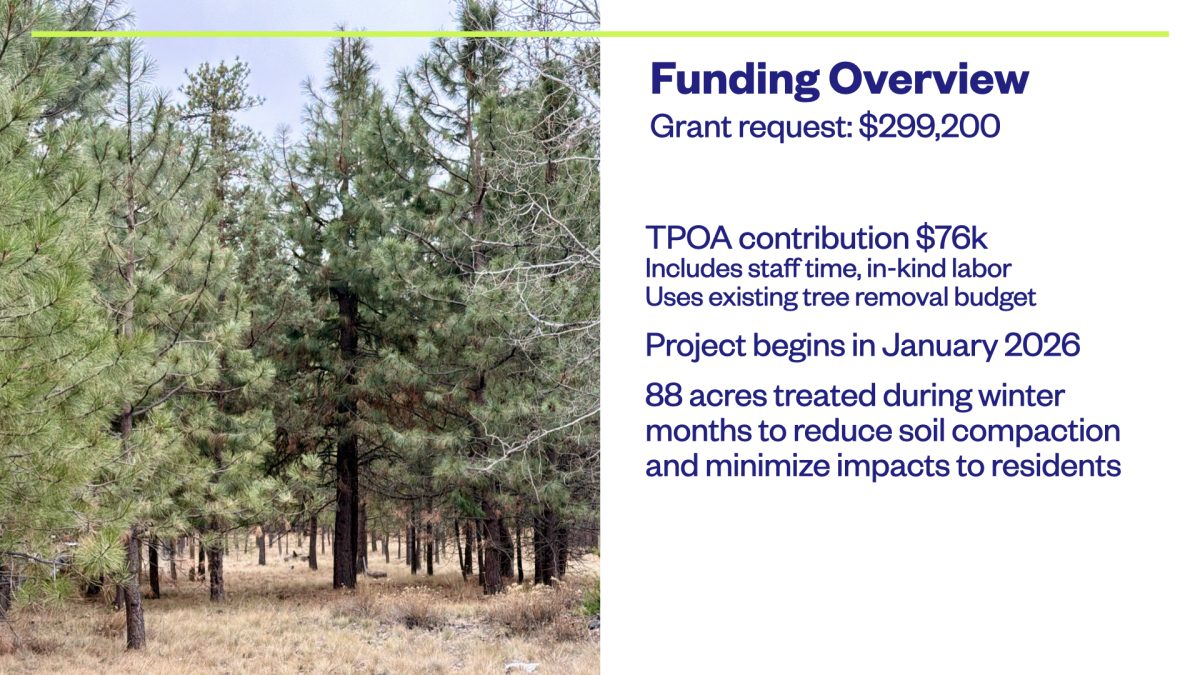
In January 2026, Tollgate received great news that our ODF Small Forestland Grant application ranked second in the state out of 115 applications. As a result, our full funding request of $299,200 was awarded. These funds will greatly accelerate Tollgate’s on-going efforts to reduce fire risk and improve the on-going health of our forested common areas, without impacting our HOA dues.
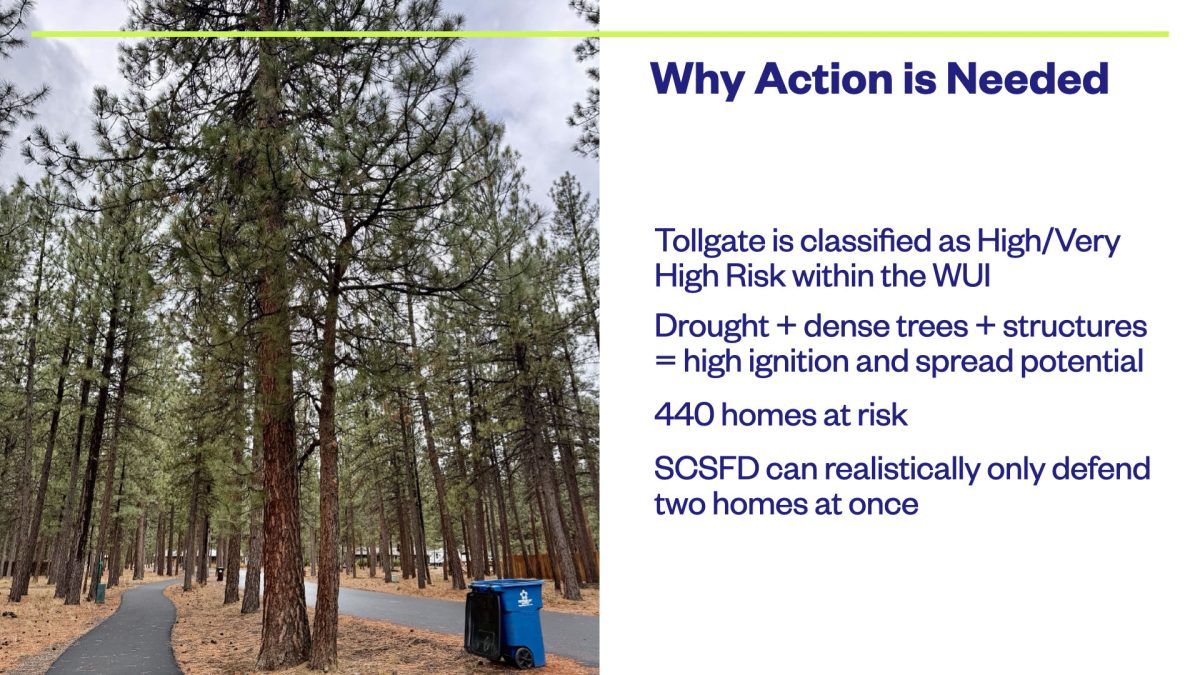
We are grateful for the work of our Firewise committee in pulling together the Tollgate grant proposal, and that the grant reviewers recognized the critical need for fire fuel reduction within our neighborhood. For several years, professionals and emergency personnel have emphasized that Tollgate’s greatest wildfire risk originates from within our own community.
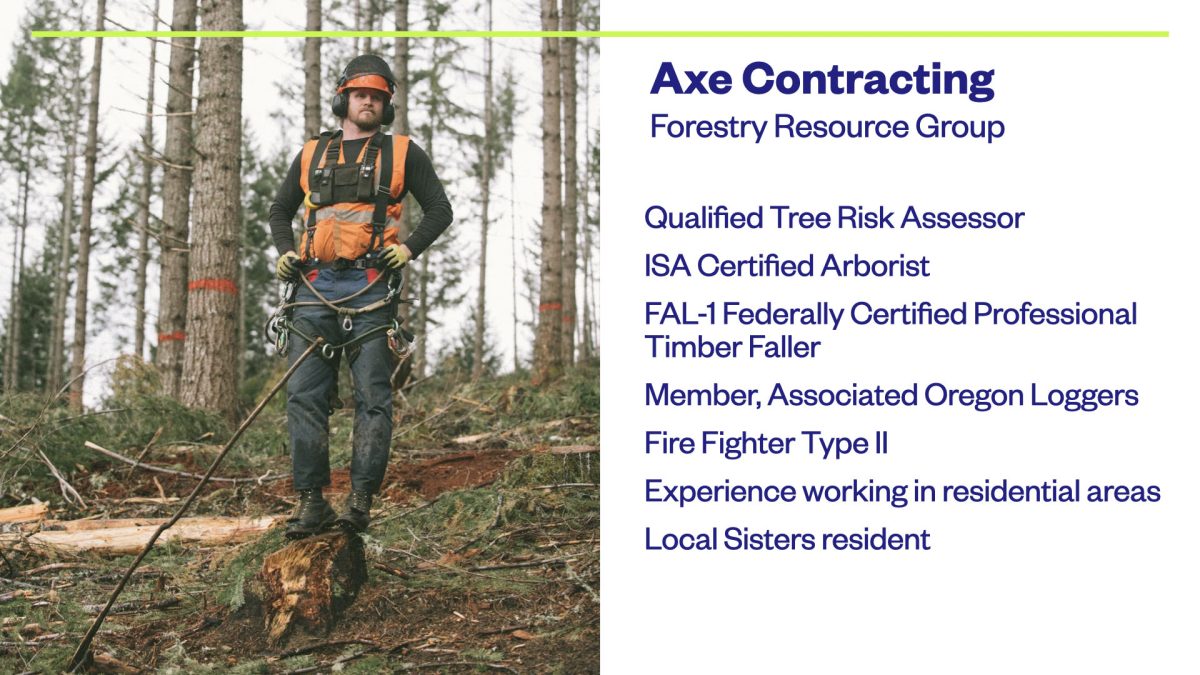
Axe Contracting began work during the last days of February and concluded Phase 1 of the project on April 3, 2026. Phase II should commence in December, weather permitting.
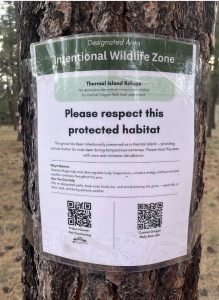
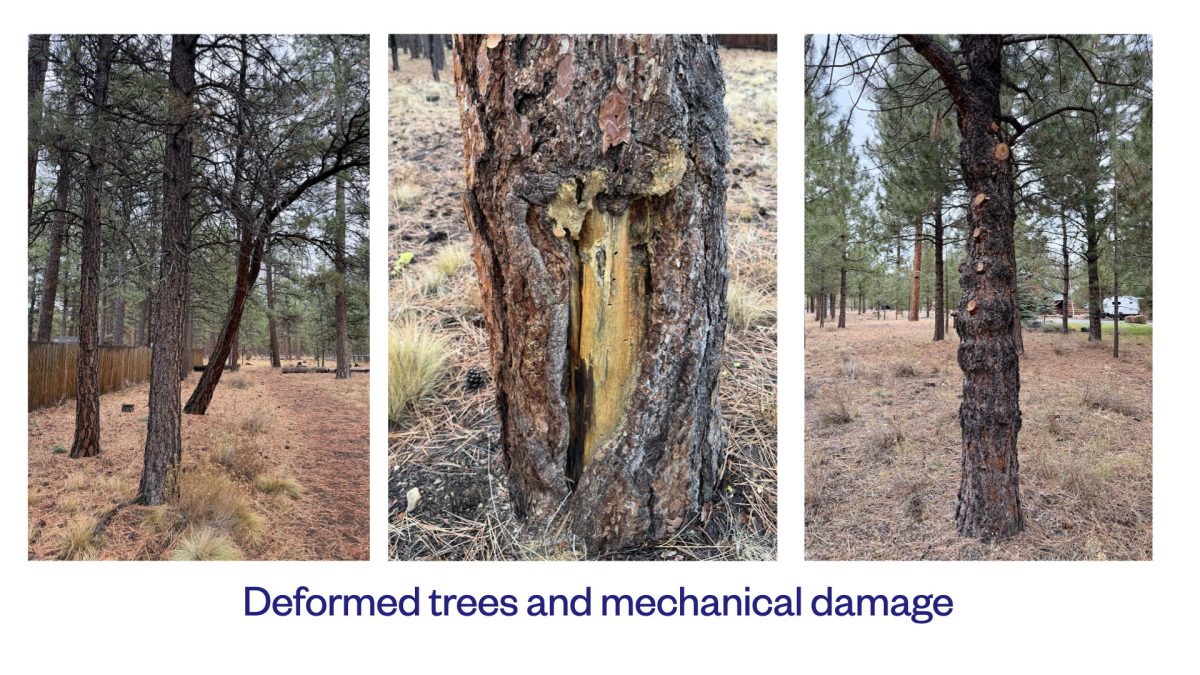
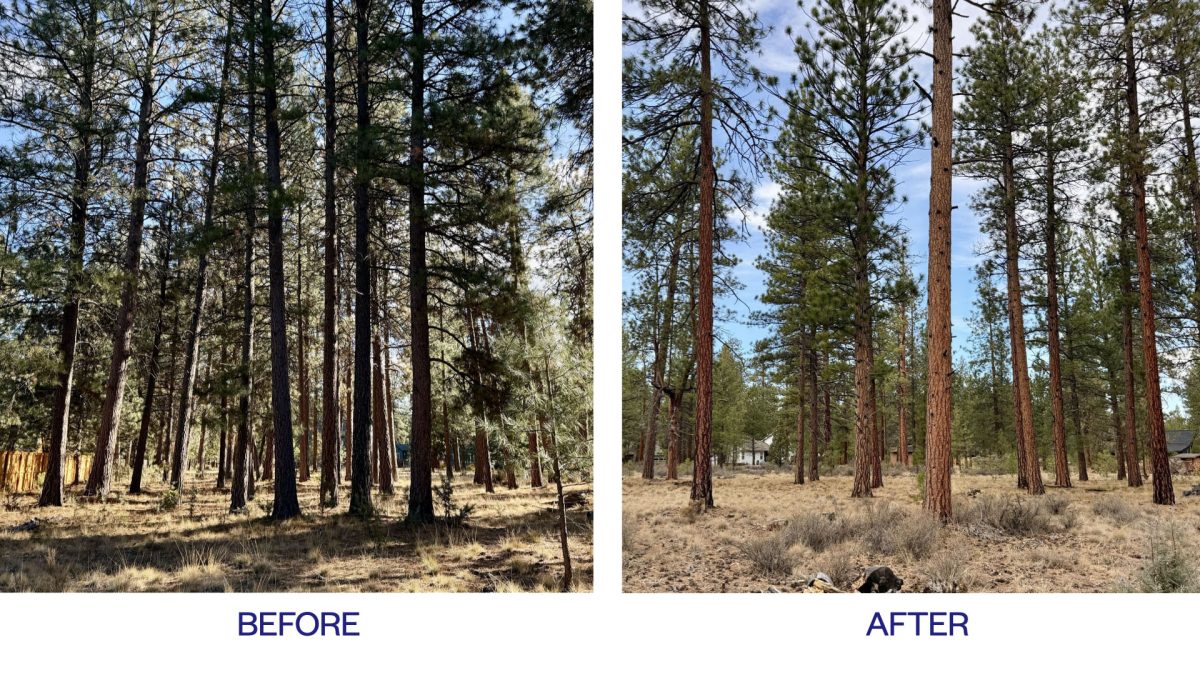
The crew worked to achieve the thinning objectives and to remove significantly infested trees within the common area. Care was taken to preserve the site soils and existing roads and paths. Large trees with evidence of infestation were closely examined to determine vigor and likelihood of mortality and retained where possible to ensure mature ponderosa remain in the Tollgate Common Area overstory. Some areas were thinned less intensely to allow for thermal refuge for mule deer and other local wildlife. Signage in these areas has been posted on trees to inform residents of the efforts taken to preserve habitat. Other areas were thinned to reduce fuel load and separate canopies. Increased spacing between large trees allows for snow and frozen precipitation to reach the ground and melt, adding to the available water on the landscape.
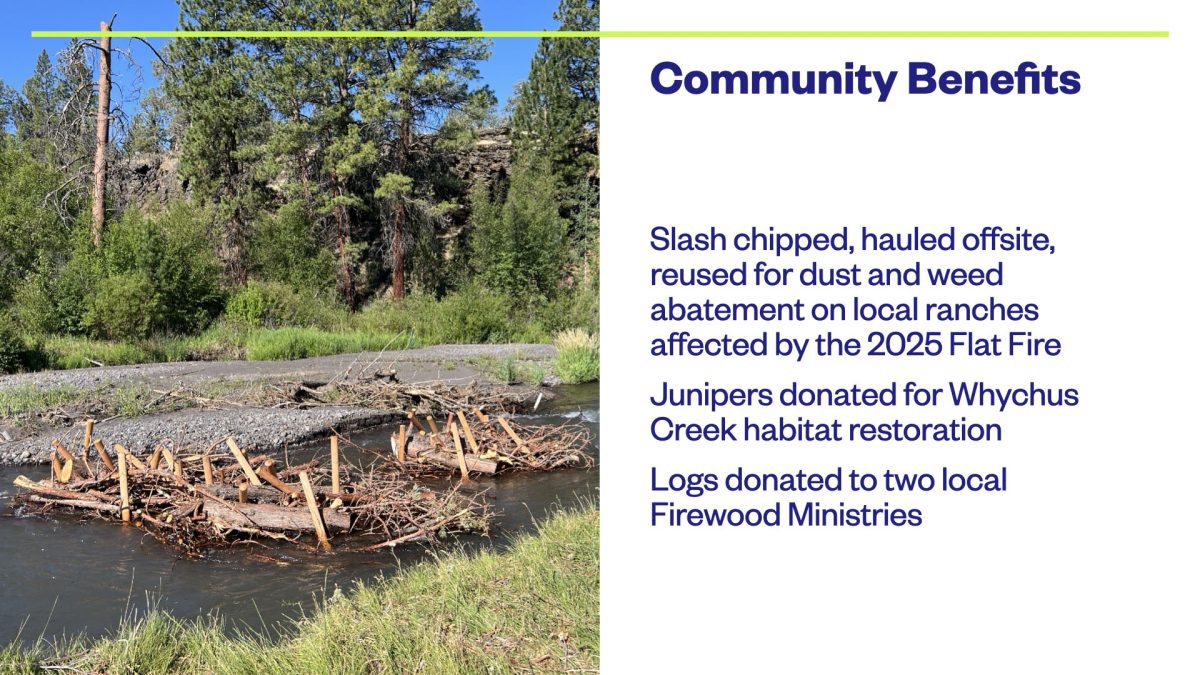
As part of Tollgate’s commitment to using non-traditional forest practices, our trees have found new purpose in Central Oregon:
- 6 loads of juniper trees were delivered to the Deschutes Land Trust’s Willow Creek Preserve for the Upper Deschutes Watershed Council stream restoration effort.
- 19 loads of logs were donated to the Highland Baptist Church firewood ministry.
- 43 loads of chipped slash were delivered to area ranches and farms, and for weed and dust abatement on properties affected by the Flat Fire.
- Read more in this Nugget News story.
About the ODF Small Forestland Grant Program
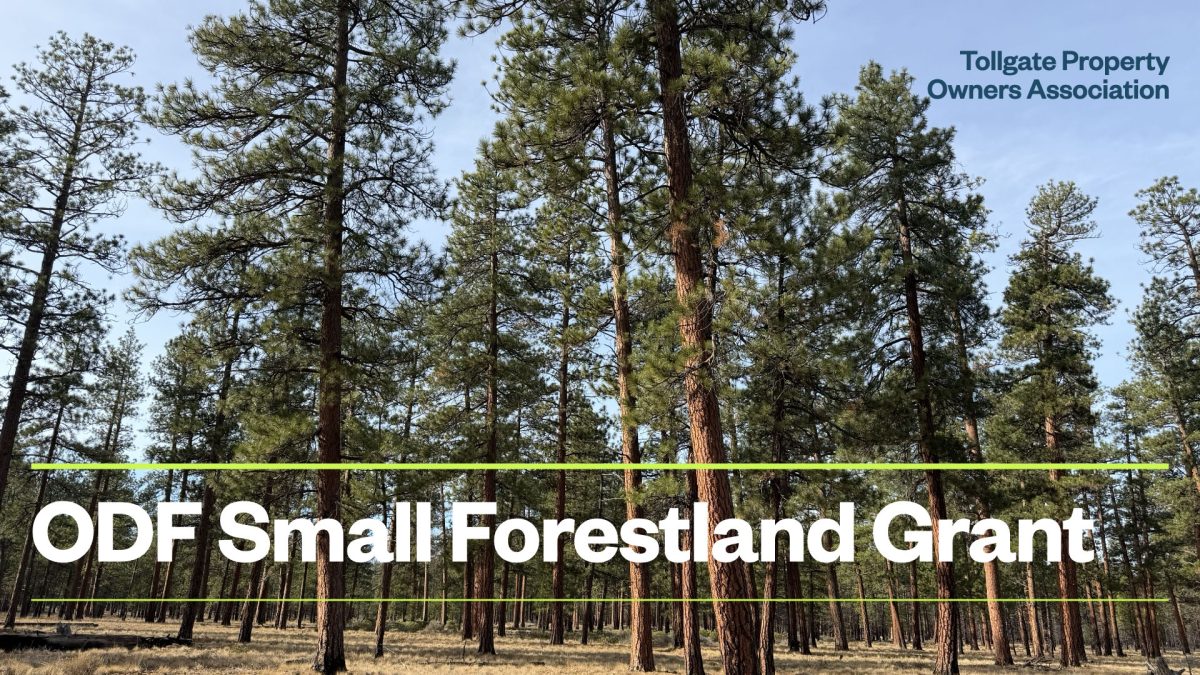
Tollgate Property Owners Association submitted an application to the Oregon Department of Forestry for $299,200 to significantly reduce wildfire risk in our common areas — protecting our homes, our water system, and improving forest health. Work will begin in early 2026 and will conclude by May 30, 2027.
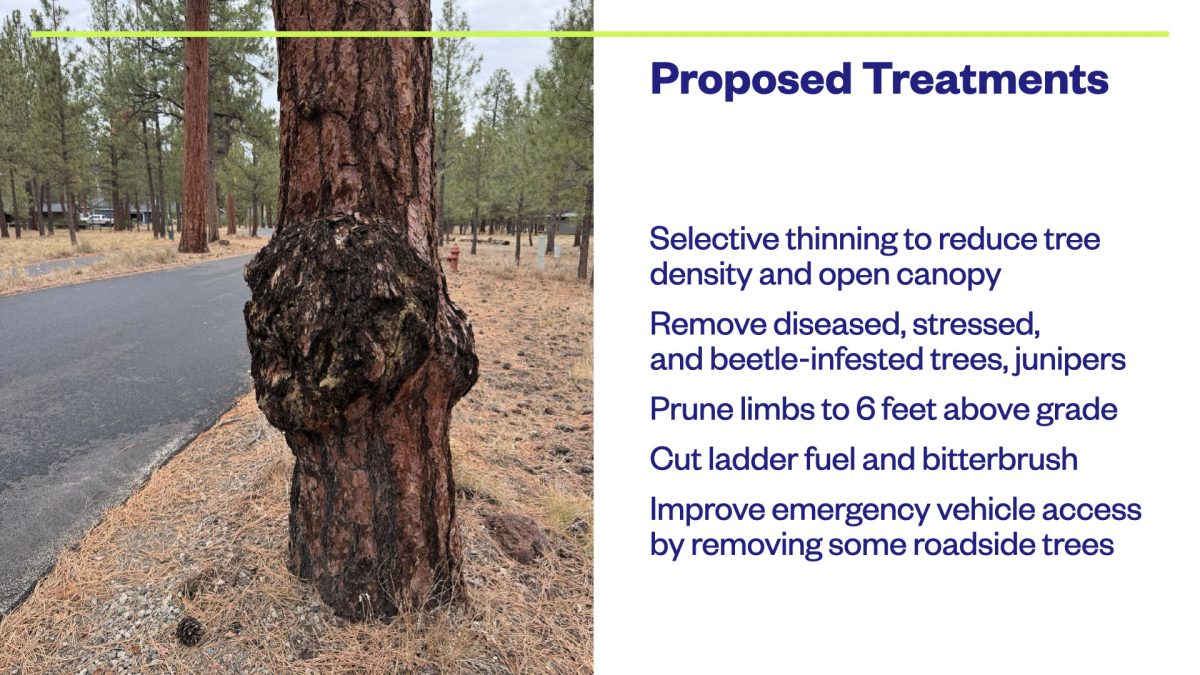
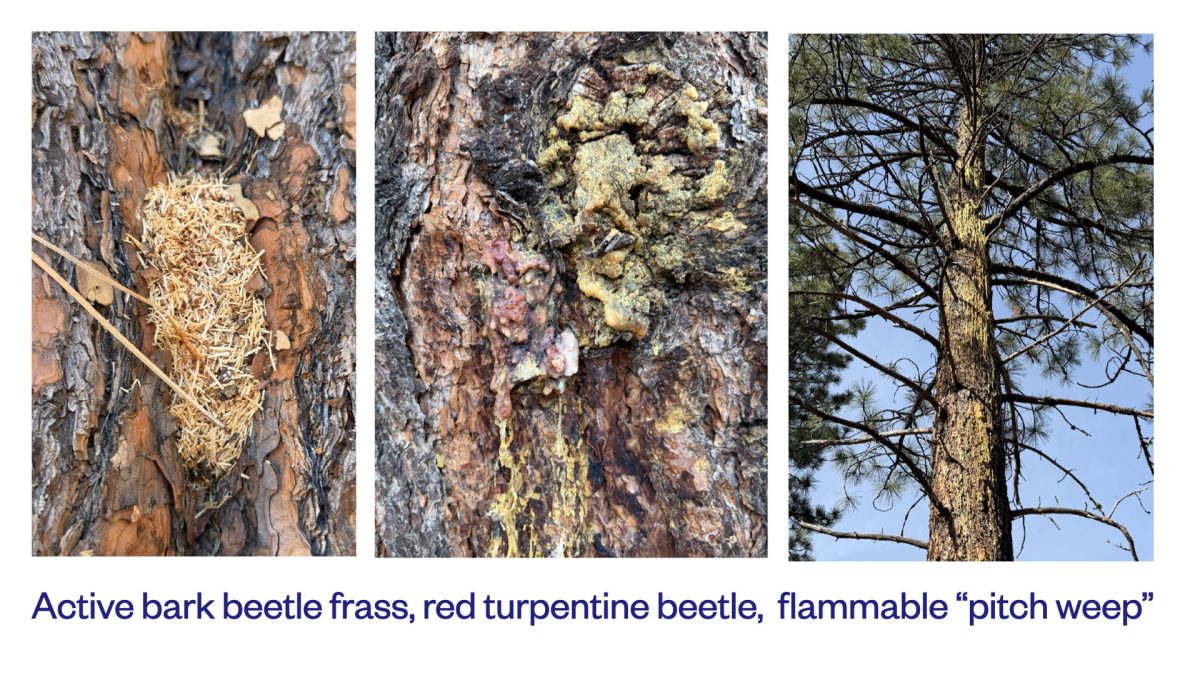
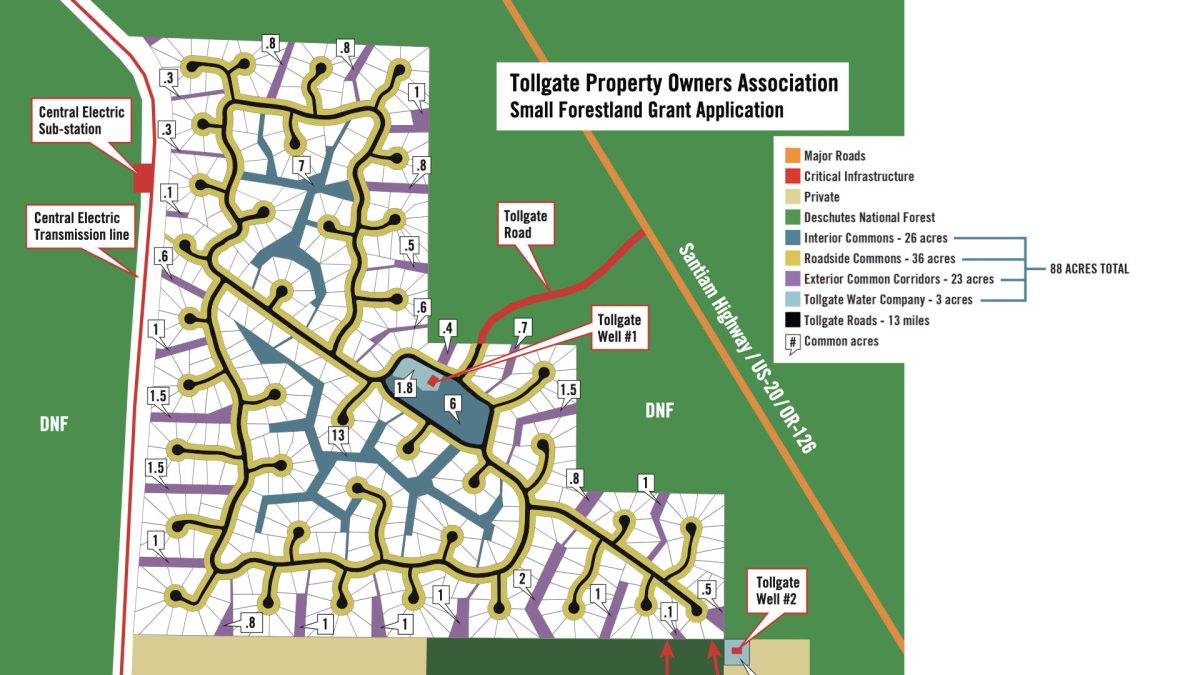
The grant covers treatment of 88 acres of Tollgate’s common areas, affecting areas adjacent to all homeowners’ lots, but not private property itself. Planned treatments, include: selectively thinning to reduce tree density and open the canopy, removal of diseased, stressed, and beetle-infested trees, juniper removal, pruning limbs to 6-feet from the ground, and roadside tree removals to improve emergency vehicle access.


Frequently asked questions
No. This is selective thinning and fuel reduction only. The goal is to restore a healthy forest structure, not to remove the forest. There is no commercial market for the trees that are slated for removal.
No. Properly spaced ponderosa forests are still beautiful. In fact, they look more like the historic, park-like forests that originally defined this region. In a few years, you’ll see a marked difference in tree health due to increased sunlight, and less competition for water and nutrients.
This project is focused on the common areas that individual homeowners cannot legally manage. These areas are interconnected and pose a collective risk to everyone. Thinning trees in more than 35 narrow corridors will also improve firefighter’s ability to access and defend your properties from all sides.
$48k is earmarked from the existing Hazard Tree Removal budget. The rest of Tollgate’s match comes from the “in-kind” labor to manage and support the grant from the business office, maintenance staff as well as Firewise volunteers.
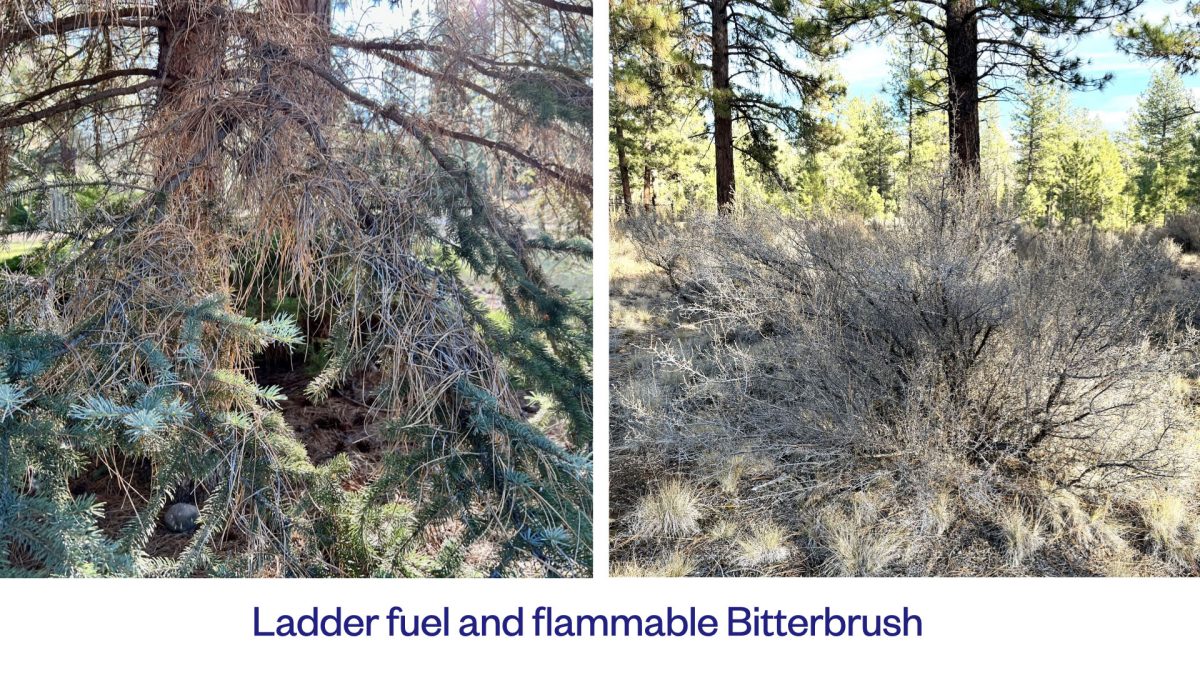
Actually, this improves wildlife habitat by restoring the open ponderosa pine ecosystem that many native species depend on. Cutting bitterbrush will stimulate new growth which is important for mule deer browse. We plan to install woodpecker nesting boxes next summer to replace the habitat lost from the diseased trees. Increased forest health is the ultimate goal— and healthier trees are more resilient to fire.
Work will be scheduled in winter months to reduce impact on the soil. Signs will be posted and notices will be emailed to affected residents as work progresses. No work is planned during late spring, summer or early fall.
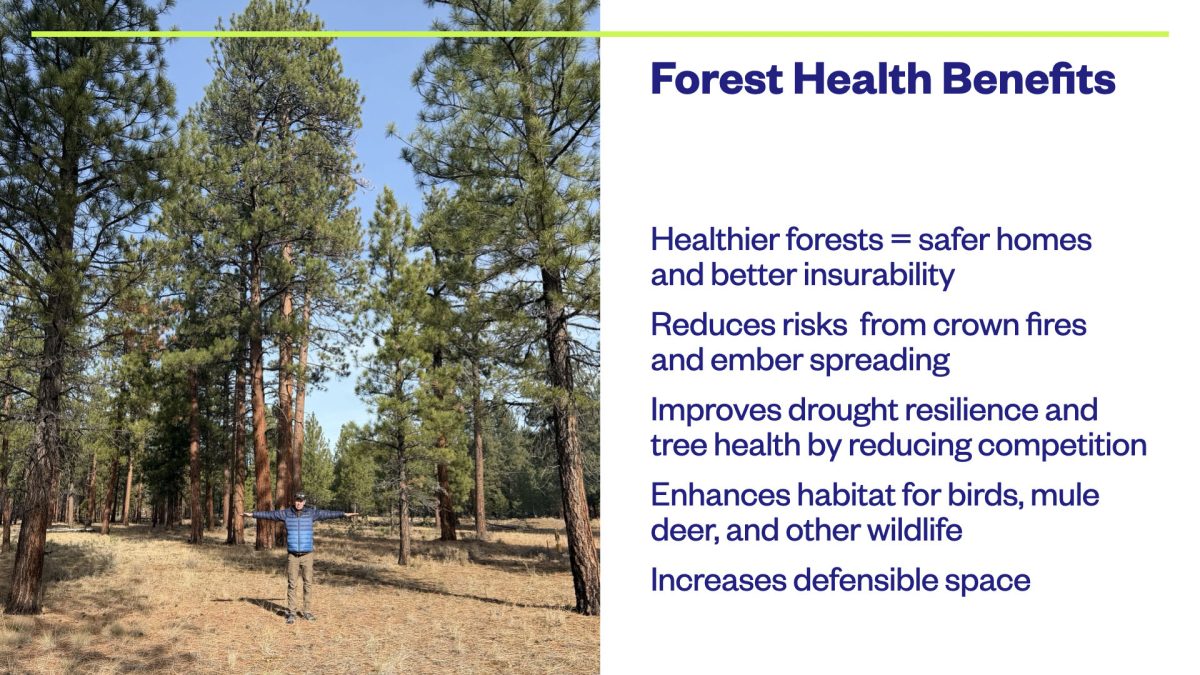
No single action “stops” wildfire — but thinning dramatically reduces intensity, speed, and ember spread, giving firefighters a chance to protect homes. Keeping fire on the ground and out of the crowns is critical. Keeping trees healthy and robust also makes them more resilient to fire.
Follow-up monitoring, prompt slash removal and ongoing maintenance is part of the plan. Optimum tree spacing actually reduces invasive pressure long-term.
Yes. Tollgate is officially ranked High to Very High risk and is surrounded by fuel, in addition to the man-made “fuel” from homes, fences, vehicles, etc. Combined with Sisters School District’s Trout Creek Conservation Area (161 acre parcel on Tollgate’s southeast border) this is one of the most vulnerable areas in Sisters. Aerial views of Tollgate clearly demonstrate how overstocked we are compared to the surrounding Deschutes National Forest, or the McKenzie Meadows tract to the southeast.
Tree density, beetle damage, drought stress and mortality will continue to worsen. Our hazard tree removal budget has not kept up with the increase in tree mortality each year. This grant is only available every two years, and competition for these funds is intense. The risk and eventual cost of inaction is far higher than the cost of mitigation.
After work is completed by forest management professionals, our maintenance staff will be able to keep the seedling population in check.
Plus, we hope that projects like this will demonstratively prove to insurers that we are taking proactive steps to lesson the risk of wildfire in our community.
To become fully informed about the condition of Tollgate’s forest, the Firewise Committee has been consulting with outside experts for over two years— representatives from the Oregon Department of Forestry, US Forest Service, Oregon State Extension Service, three ISA Certified Arborists, the Oregon State Fire Marshall’s Office, Tamarack Wildfire Consulting, the Deschutes Land Trust and the Sisters Camp Sherman Fire District. This ODF grant opportunity is available only once every two years. It’s a unique opportunity that will allow Tollgate to afford to address our forest health while lowering our fire risk.